Roof Cleaning Before Autumn: July & August Checklist
On this page
July and August are the best months to get your roof and gutters cleaned in Cheshire, while the weather’s dry and well before autumn rain finds every bit of moss you’ve been ignoring since spring. Most homeowners only think about their roof once water is already coming through somewhere, but the moss and debris causing that problem has usually been building up for months. Clean it now, while access is easy and we’re not fighting the rush, and you give yourself a clear run through autumn and winter.
Why clean your roof in summer?
Moss doesn’t wait for autumn, it’s been growing quietly on the shaded side of your roof since last winter. By July it’s often thick enough to see from the street. Left alone, it keeps soaking up rain, holding moisture against the tiles, and slowly washing down into the gutters as grit and dead moss.
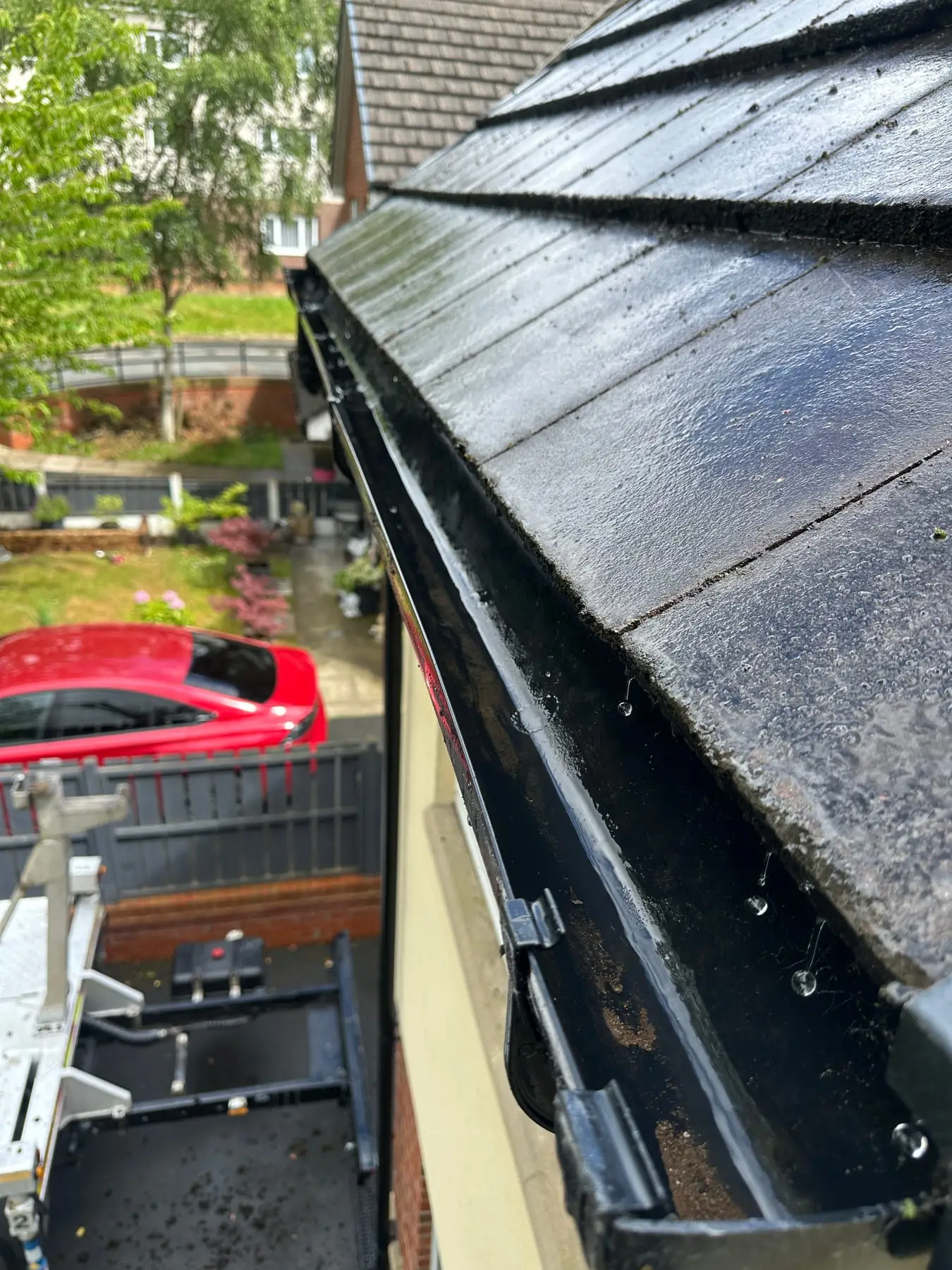
That’s the bit most people miss. It’s not the moss on the roof that causes the damage, it’s what happens once the first proper autumn downpour hits a gutter that’s already half-blocked with it. Water that can’t get away overflows behind the fascia, sits against the brickwork, or backs up under the tile line. By the time you notice a damp patch on a bedroom ceiling in November, the problem started in July.
Cleaning in summer also means the moss comes off easier. Dry moss is brittle and lifts cleanly by hand. Wet, autumn moss is heavier, clings harder, and takes longer to clear properly.
The summer roof checklist
Fifteen minutes from the garden with a cup of tea is enough to tell you whether your roof needs attention before autumn.
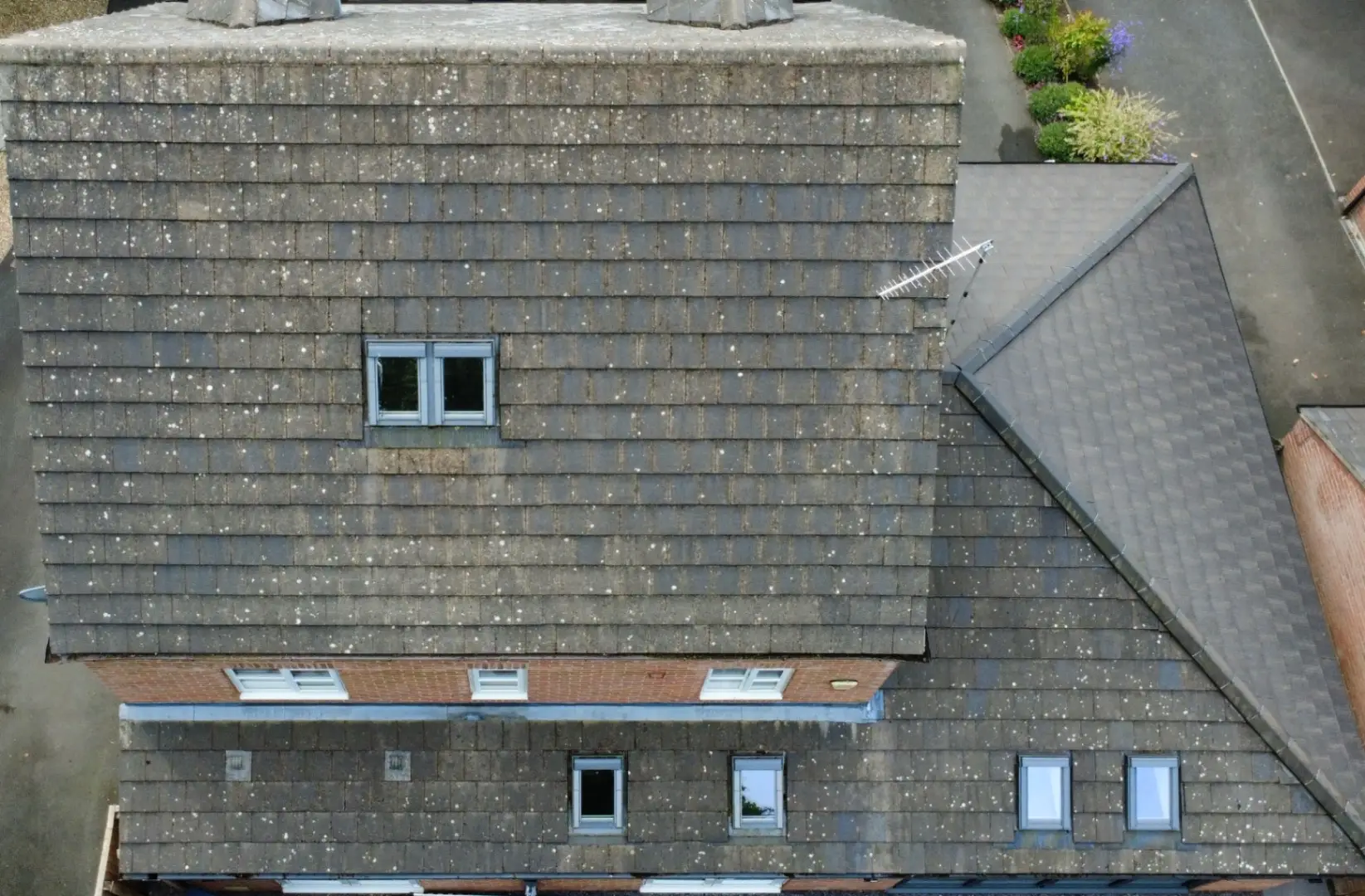
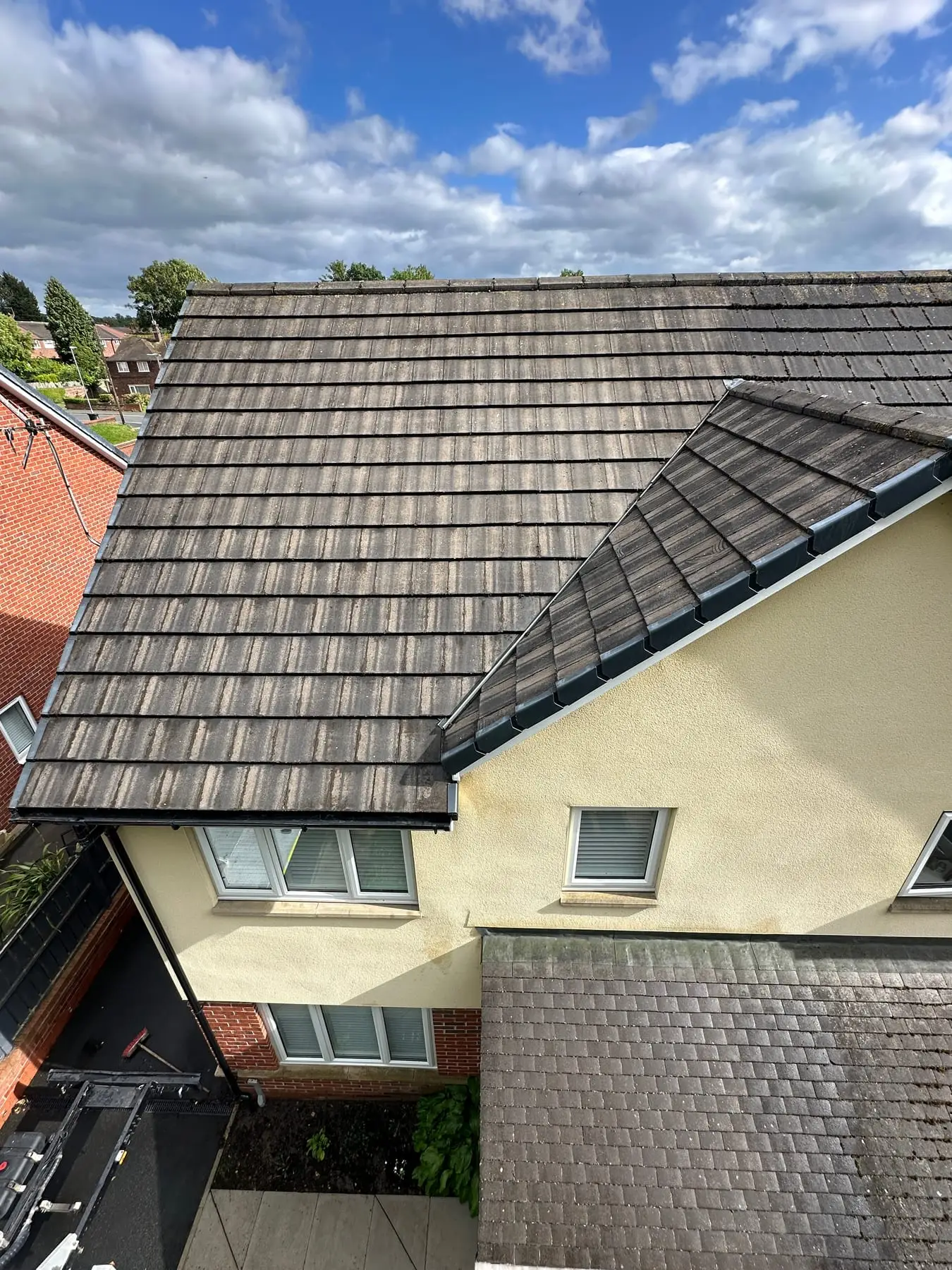
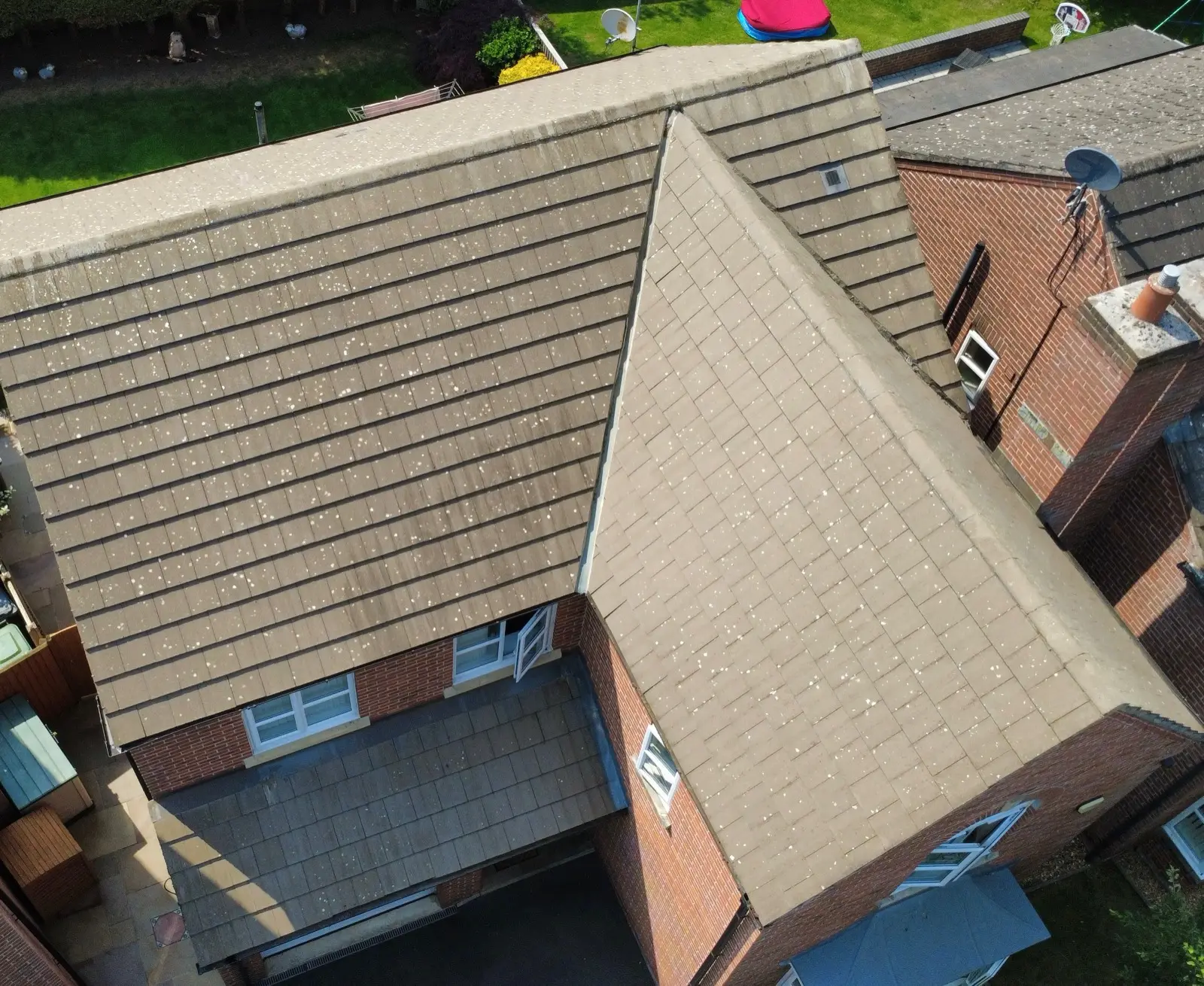
Stand back and look along the ridge line and valleys for green or black staining, that’s moss and algae, not just dirt. Check the gutters for moss washing down onto the fascia boards or staining the brickwork below. Look for sagging gutter sections or water marks where a joint has been overflowing in light rain. Note whether the roof is shaded by trees or faces north, both moss up faster and need attention sooner. If you can see loose grit or granules collecting in the gutter, that’s tile surface washing away, worth getting looked at.
If two or more of those apply, it’s worth booking a clean now rather than waiting.
What to look for on your roof
A few specific signs tell us how urgent a job is when we quote it. Thick, spongy moss sitting along the ridge tiles and in the valleys is the big one, it holds water against the roof and is usually the first place leaks start. Slipped or lifted tiles poking up through the moss are worth flagging too, moss growth often hides a tile that’s already moved.
If your gutters are already overflowing in ordinary rain, not a downpour, that’s a sign they’re close to blocked right now, not a problem waiting for autumn. And if you’ve got a flat-roofed extension or a dormer, check those separately, they collect debris faster than a pitched roof and get missed from ground level.
How we clean roofs safely in summer
We reach the whole roof from our vehicle-mounted platform, so nobody walks on your tiles and there’s no scaffold going up for a few hours’ work. The moss comes off by hand, face by face, from the ridge down to the gutter line, including the parts over conservatories and extensions that a ladder can’t reach safely. Once the roof’s clear, we flush the gutters and downpipes so none of the loosened moss ends up causing the exact blockage we were trying to avoid.
It’s the same method whether it’s a quick summer tidy-up or a heavily mossed roof that’s been left a few years too long, we just quote the time accordingly. You can see the difference it makes in our roof cleaning and moss removal service, and while we’re up there we can sort gutter cleaning in the same visit.
Getting it done before the autumn rush
We cover Runcorn, Widnes and the rest of Halton, plus Frodsham, Helsby, Northwich, Warrington, St Helens, Liverpool and Chester. July and August tend to be quieter for us than September onwards, when storm damage and blocked gutters start taking priority, so it’s the easiest time of year to get a slot that suits you.
If you’re not sure whether your roof needs a full clean or just the gutters doing, we’ll tell you honestly when we have a look. Not every roof needs the full treatment every year.
“Great service! So professional and managed to get the job done and cleaned away so quickly. Gutters look great and I would 100% use again. Thanks Jordan.”
Ready to clean your roof this summer?
I’d rather tell you now than let you find out the hard way in November. A roof that looks fine from the street can still be sitting on a gutter that’s three-quarters blocked. If you’ve spotted moss creeping along the ridge or noticed the gutters overflowing in ordinary rain, get it looked at this summer rather than waiting.
We quote every roof individually once we’ve seen it, so if you want a proper figure rather than a guess, get in touch through our contact page. If you’d like to see what roof cleaning typically costs before you call, our roof cleaning cost guide breaks it down.